
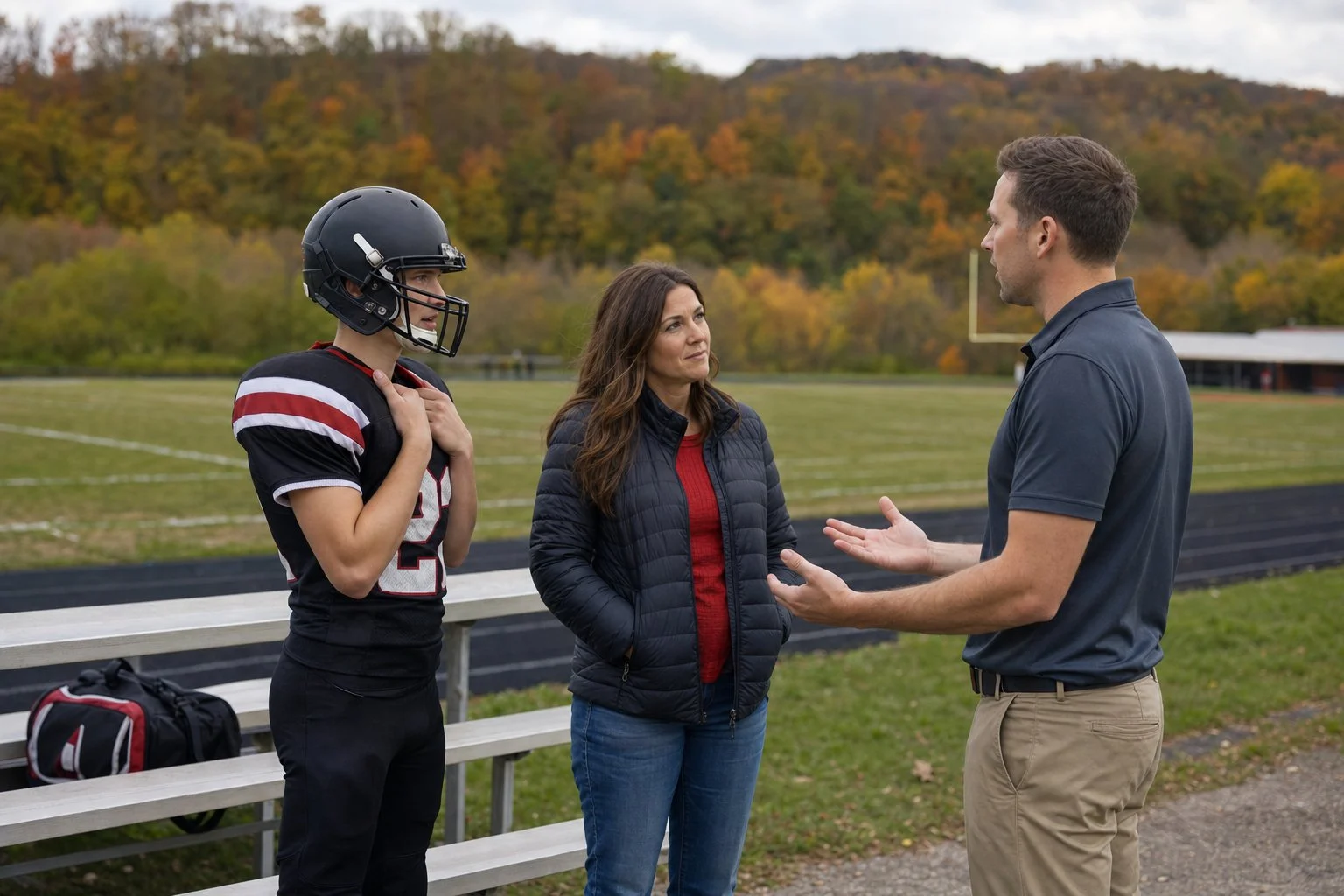
Chiropractic Care for Student Athletes: What Parents Need to Know This Season
Every sports season brings a familiar mix of pride and concern. I see it in parents’ faces at our Indiana, PA office: your child is excited to compete, but you also know that a hard tackle, awkward landing, fast pivot, or collision can change the week quickly. You may be wondering whether the pain is “just soreness,” whether your athlete should sit out, and where chiropractic care fits alongside the rest of their health team.
My perspective is personal as well as professional. A football neck injury when I was young helped point me toward chiropractic as a career. That experience taught me how quickly an injury can affect more than the body part that hurts. It can change confidence, sleep, school concentration, training habits, and the way an athlete moves. It also showed me why prompt, thoughtful evaluation matters.
I founded Sleppy Chiropractic to help families take a proactive, non-surgical, drug-free approach to neuromuscular and skeletal health. Since 2002, I have cared for patients from Indiana County and beyond, including young athletes, former athletes, and adults whose current pain may trace back to an injury they pushed through years ago. My goal is not to promise a shortcut back to the field. It is to help each person understand what is going on, make a sound plan, and move forward safely with the right providers involved.
Sports injuries are not always obvious on game day
Some injuries announce themselves immediately: a fall followed by sharp pain, a visible deformity, an inability to bear weight, or symptoms after a blow to the head. Others are quieter. A player may finish the game, wake up stiff the next morning, and assume it will pass. They may alter their throwing motion, avoid turning their head, limp slightly, or say their back only hurts “after practice.” Those compensations can become habits if no one looks closely.
I encourage parents to listen carefully when an athlete reports pain, numbness, tingling, weakness, recurring headaches, dizziness, balance changes, or pain that continues beyond ordinary post-exercise soreness. A young person may minimize symptoms because they do not want to miss playing time, disappoint teammates, or lose a starting position. That is precisely why adults need to set the tone: speaking up is part of being a responsible athlete.
Immediate care does not always mean an adjustment. It means getting the right level of evaluation without delay. Depending on the symptoms and mechanism of injury, that may mean emergency care, urgent care, a pediatrician, a sports medicine clinician, or another appropriate provider. In our office, we do not try to force every situation into a chiropractic treatment plan. We screen first, explain what we find, and refer when another form of assessment or care is needed.
When parents should seek urgent evaluation
After a sports injury, seek urgent or emergency medical evaluation for symptoms such as loss of consciousness, confusion, worsening headache, repeated vomiting, seizure activity, neck pain after significant trauma, severe pain, visible deformity, new weakness, numbness or tingling, loss of coordination, difficulty walking, or changes in bowel or bladder control. These concerns need prompt medical attention and should not be managed by waiting for the next practice to see how things feel.
What happens at a first chiropractic visit for a student athlete
Parents often tell me that the unknown is more intimidating than the visit itself. At Sleppy Chiropractic, I want a first appointment to feel organized, unhurried, and understandable. For a minor, a parent or guardian is part of the conversation. We want to hear the athlete’s version of what happened, too, because details from the field, court, mat, course, or gym can be important.
The visit generally begins with a health history and a discussion of the sport, position, schedule, prior injuries, symptoms, and goals. I ask questions that help distinguish a sudden traumatic injury from a gradual overload pattern. For example: Did symptoms start after one play? Is pain worse during sprinting, lifting, throwing, or sitting in class? Has the athlete changed their movement to get through practice? Are there headaches, dizziness, or symptoms that make concussion assessment a concern?
Next comes a focused examination. That may include observing posture and movement, checking ranges of motion, assessing areas of tenderness, and performing appropriate orthopedic or neurological screening. My post-doctoral training in applied clinical neuroscience also informs how I think about symptoms involving balance, coordination, headaches, and post-concussion concerns. When indicated, we may recommend imaging or coordinate referral rather than beginning treatment that day.
Before we proceed, we explain our working assessment in plain language. Parents should feel free to ask: What are you concerned about? What are the options? What are the possible benefits and limitations? What activities should my child avoid? What would mean we need another provider involved? A care plan should never be a mystery.
How chiropractic care may fit into a sports wellness plan
Chiropractic care is one piece of a comprehensive sports wellness plan, not a replacement for emergency medicine, primary care, orthopedic care, physical therapy, athletic training, appropriate strength coaching, nutrition, sleep, or sport-specific skill instruction. The best plan is coordinated around the athlete’s needs.
When chiropractic care is appropriate, our focus may include improving comfortable movement, addressing joint and soft-tissue restrictions, supporting recovery, and helping the athlete understand the daily habits that influence how they feel. For some patients, that includes hands-on chiropractic adjustments or mobilization. For others, it may involve soft-tissue work, movement guidance, home exercises, or discussion about training load and recovery. The exact approach depends on the examination, age, health history, symptoms, preferences, and response to care.
At our office, Dr. Evan R. Ludwig, D.C., Dr. Seth Link, D.C., and I share a patient-first approach: we meet people where they are and communicate clearly about what care can and cannot address. We also offer advanced modalities such as MLS Laser Therapy, PEMF Therapy, Shockwave Therapy, and Decompression Therapy when they are clinically appropriate as part of an individualized plan. These options are not automatic add-ons, and they are not substitutes for a careful assessment or appropriate medical evaluation.
Common components parents may hear us discuss
-
Gentle spinal or extremity joint care: Techniques may be adapted to the athlete’s age, size, condition, and comfort level.
-
Soft-tissue support: This may address muscle tension or movement restrictions that accompany training and injury recovery.
-
Movement and mobility guidance: We may discuss safe ways to restore motion, warm up, cool down, or reduce aggravating activities.
-
Recovery routines: Sleep, hydration, nutrition, rest days, and communication with coaches all influence an athlete’s ability to recover.
-
Referral and collaboration: When symptoms point beyond our scope, we help families identify the appropriate next step.
Why “playing through it” can create a longer story
Many adults who come to see me do not connect today’s neck stiffness, recurring low-back pain, shoulder limitation, or headaches to an old sports injury at first. Then the conversation turns to a high-school collision, a wrestling injury, a fall from gymnastics, or years of repetitive throwing. I cannot say that an old injury is the sole cause of someone’s current symptoms without an individual examination. Bodies and lives are more complex than that. But I can say that unresolved injuries and persistent movement compensations deserve attention.
A teenager who protects one ankle may load a knee, hip, or lower back differently. A player with a stiff neck may rotate their upper body differently while checking traffic, lifting, or tackling. A young athlete who repeatedly trains through pain can lose trust in normal movement. Over time, those patterns may make ordinary activities less comfortable.
This is why I ask families to think beyond the next game. Prompt evaluation is not about making an athlete fearful or pulling them out of every activity. It is about getting clarity early enough to make better decisions. Sometimes the best decision is a short period of modified activity. Sometimes it is referral. Sometimes it is progressive care and a structured return to participation. The answer should be based on the person in front of us, not pressure from the calendar.
Questions parents ask us most often
Is chiropractic care safe for my child?
Safety begins with appropriate patient selection, a thorough history, examination, informed consent, and knowing when not to treat. Chiropractic techniques are not one-size-fits-all, particularly for children and adolescents. I discuss the proposed approach, possible temporary soreness or symptom changes, alternatives, and any reasons to refer before care begins. Parents should share all diagnoses, medications, imaging, prior surgeries, head-injury history, and current symptoms so we can make responsible decisions together.
Can my child return to play after an adjustment?
Not automatically. Return-to-play decisions depend on the injury, symptoms, examination findings, sport demands, and input from the appropriate members of the athlete’s care team. Feeling better for a few hours is not the same as being ready for contact, cutting, tumbling, heavy lifting, or full competition. We help families consider function, not just pain level.
Do you treat concussions?
Any suspected concussion requires prompt assessment by an appropriate medical professional and adherence to a supervised return-to-learn and return-to-sport process. My advanced training in applied clinical neuroscience helps me recognize and discuss neurological concerns within my scope, but concussion care requires coordination. We do not minimize head-injury symptoms or use chiropractic care as a replacement for proper concussion evaluation.
Will insurance cover visits?
Coverage varies by plan, deductible, referral requirements, diagnosis, and the specific services provided. Before beginning a plan, our team can help you understand the questions to ask your insurer and explain the financial information available in our office. I believe families deserve straightforward conversations about cost and options rather than surprises.
A practical game plan for parents
-
Take new symptoms seriously. Ask what happened, where it hurts, what makes it worse, and whether there are neurological symptoms.
-
Do not let the schedule make the decision. A tournament, playoff, showcase, or rivalry game can feel urgent, but a child’s health is more important than one event.
-
Keep a simple record. Note the date, mechanism of injury, symptoms, activities that aggravate them, and any care already received.
-
Invite honest communication. Tell your athlete that reporting pain is not letting the team down; it is protecting their ability to participate over the long term.
-
Build a team around the athlete. Communicate with coaches, athletic trainers, pediatric providers, and other clinicians as appropriate, while respecting your child’s privacy.
-
Think in seasons, not single games. Strong fundamentals, recovery, mobility, conditioning, and timely care are part of a sustainable athletic life.
For the former athlete whose pain showed up later
If you are an adult reading this and thinking about an injury you shrugged off years ago, you are not alone. You may have a job, a family, and responsibilities that make it easy to keep postponing care. You may also assume that pain is simply the price of getting older. I encourage you not to make that assumption.
At Sleppy Chiropractic, we start where you are now. We listen to your history, assess your current movement and symptoms, and discuss whether chiropractic care may be appropriate or whether another evaluation should come first. The goal is not to rewrite the past. It is to understand the present and create a reasonable path toward better function and confidence in movement.
Protect the athlete, not just the season
As a 100 Year Lifestyle Certified practitioner, I believe health decisions should support the life a person wants to live far beyond this season. For a student athlete, that may mean choosing evaluation over guesswork, recovery over pressure, and a collaborative care plan over a quick fix. For a parent, it means being the person who notices the small changes and gives your child permission to speak up.
My own football injury helped shape the work I have been honored to do for more than two decades. At Sleppy Chiropractic, we bring that same respect for each athlete’s future to every visit: listen carefully, assess thoughtfully, communicate honestly, and help families make informed choices for the road ahead.
About Dr. Matthew Sleppy
Founder, Sleppy Chiropractic
Dr. Matthew Sleppy is the founder of Sleppy Chiropractic in Indiana, PA, where he has been serving patients since 2002. A lifelong Indiana County resident, Dr. Sleppy attended Penns Manor High School and IUP before earning his Doctor of Chiropractic degree Magna Cum Laude from Life University. With over 20 years of experience and more than 10,000 patients helped, he specializes in neuromuscular and skeletal health, including post-concussion care through his advanced training in applied clinical neuroscience. Dr. Sleppy is a certified 100 Year Lifestyle practitioner, committed to helping patients build long-term vitality through proactive, evidence-based chiropractic care. When he’s not in the office, he lives on a horse farm in Creekside, PA with his wife Jennifer and their four children.
Disclaimer: The information provided on this website is for educational purposes only and is not a substitute for professional medical advice, diagnosis, or treatment. Please consult with a licensed healthcare provider for personalized care.